


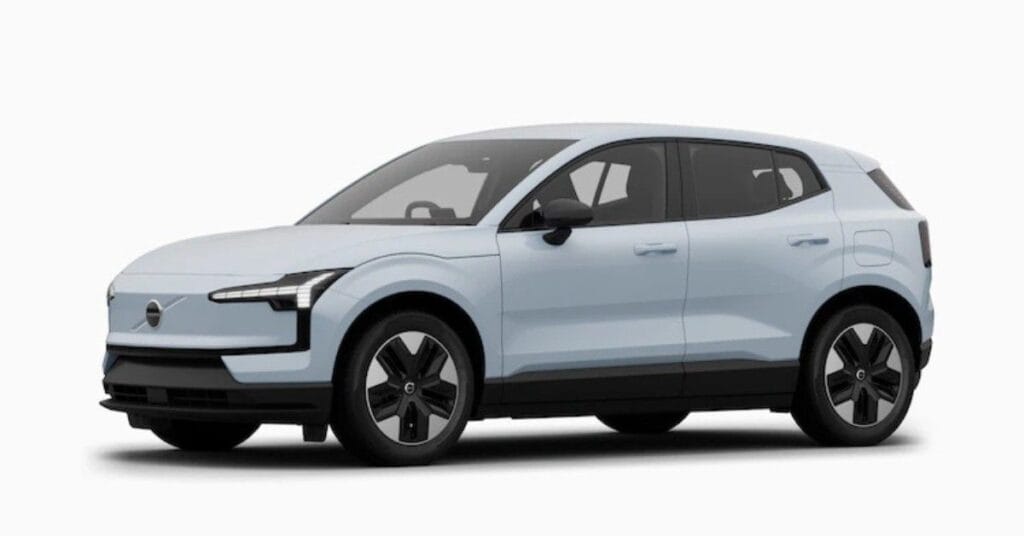
The Volvo EX30 marks a new chapter in sustainable automotive design. As the smallest and one of the most eco-efficient electric SUVs Volvo has ever produced, the EX30 combines minimalist design with advanced engineering to reduce both embodied and operational carbon footprint. Here’s a detailed look at how Volvo has leveraged design simplicity, recycled materials, streamlined production, and efficient architecture to lower environmental impact.
1. A Life-Cycle of EX30 Assessment that Sets a Benchmark
Volvo states that the EX30 has the smallest carbon footprint of any fully electric Volvo car to date. According to Volvo’s life-cycle assessment (LCA), including production, raw materials, supplier emissions, operational use, etc., the total carbon emissions over 200,000 km for the EX30 fall below 30 tonnes CO₂e. For context, this represents an approximately 25% reduction compared to Volvo’s earlier electric SUV models like the XC40 and C40.
2. Minimalist Design Principles and Fewer Parts
One of the most effective ways to reduce carbon emissions is to simplify design—that means fewer parts, lighter weight, and streamlined assembly. Volvo has adopted minimalist design throughout the EX30: clean exterior lines, less overhang, simplified components, and fewer physical controls inside the vehicle.
By reducing part counts, the Volvo EX30 not only lowers material usage but also reduces the logistics, packaging, and manufacturing energy footprint. For example, many controls are consolidated via a central touchscreen, reducing the need for multiple buttons and switches. The design aesthetic follows Volvo’s Scandinavian minimalism, which isn’t simply about looks—it’s about efficiency.
3. Use of Recycled and Renewable Materials in Volvo EX30
Another pillar of the EX30’s carbon savings comes from material choices:
Approximately 25% of aluminium used in the EX30 is recycled.
Around 17% of steel is recycled.
Similarly, 17% of plastics come from recycled sources.
Interior trim features renewable or recycled fabrics: upcycled denim fibers, flax, a wool-blend with ~70% recycled polyester, carpets from recycled PET bottles, etc.
These material choices reduce the embodied carbon—the emissions associated with extraction, processing, and transportation of raw materials—by a significant margin.
4. Efficient Battery & Powertrain Design
Operational emissions largely come from energy consumption during drive cycles and charging. The Volvo EX30 addresses this via:
A relatively compact battery size in its entry models, paired with efficient electric motors.
Fast-charging capability: Volvo claims EX30 can charge from 10% to 80% in about 26.5 minutes using DC fast charging.
EPA-certified range up to about 253 miles for the Twin Motor Performance variant, which helps reduce “range anxiety” while maintaining efficiency.
Minimal excess in weight, efficient wheel and aerodynamic design (lightweight, aerodynamic wheels, optimized body shape) help reduce energy needed per mile. Every aerodynamic enhancement or weight savings translates directly into lower energy use, hence lower carbon emissions during operation.
5. Cleaner Production & Supply Chain
Volvo has not limited its carbon-reduction efforts to the car itself. Key steps include:
The EX30 is built in a Volvo plant in China that uses 100% climate-neutral electricity.
Volvo’s Tier-1 suppliers are being required to shift to renewable energy; around 95% of those suppliers have committed to this by 2025.
These changes reduce upstream emissions (raw materials, components) and manufacturing emissions, which are major contributors in the life-cycle of EVs.
6. Compactness & Reduced Material Intensity
Because EX30 is Volvo’s smallest fully electric SUV, it by definition uses less material, less interior space to condition (heat, cool), and less weight to move. Fewer large components, less volume to clad, and less waste in many respects.
Also, a more compact vehicle footprint often leads to better aerodynamics relative to size, fewer raw materials, and lower emissions both in production and in real-world use. Volvo’s minimalist exterior design (reduced overhangs, efficient shape) plays into this.
7. Quantified Carbon Savings
To summarize how the above design choices add up:
The lifetime carbon footprint (LCA) for production + 200,000 km of usage is <30 tonnes CO₂e for the EX30.
This is ~25% less than previous Volvo electric SUVs (e.g. XC40, C40).
Recycled content (aluminium, steel, plastics) significantly reduce embodied emissions. Each percentage of recycled material lowers associated emissions (e.g. smelting, refining, mining) which are energy-intensive.
Reduced weight and aerodynamic drag reduce energy demand per mile. For example, improved MPGe ratings (city/highway) in US specs help validate this.
8. Implications & Outlook
Volvo’s “less is more” approach with the EX30 shows that environmental efficiency isn’t just about adding new tech—it’s also about what you leave out. By reducing complexity, using recycled materials, optimizing production, and focusing on minimalism, Volvo has pushed down both manufacturing and use-phase emissions significantly.
For consumers, this means a smaller carbon footprint without giving up safety, style, or performance. For the industry, the EX30 could serve as a model: more compact, more efficient EVs designed from a materials, supply chain, life-cycle perspective rather than just adding batteries and power.
Also Read: Sleeper Hit: The Volvo EX30’s Performance Will Leave You Speechless.
Conclusion
The Volvo EX30 embodies a holistic, minimalist design that goes beyond aesthetic—every design decision contributes to carbon reduction: lighter materials, recycled content, simpler interiors, efficient batteries and powertrains, clean energy in manufacturing, and indeed smaller size. These combined strategies allow EX30 to become Volvo’s lowest carbon footprint model yet, proving that in automotive sustainability, less really is more.


Ranjit Kumar Mishra is an automobile news writer passionate about cars, bikes, and the ever-evolving world of mobility. With a keen eye for innovation and trends, he delivers insightful, reader-friendly articles on the latest launches, reviews, and industry updates, helping enthusiasts stay informed about the fast-paced automotive world.